


How To Choose A Quality Creatine Supplement (So You're Not Wasting Your Money)
In Part 1, I walked through what creatine actually does in your body — why it's not just a gym supplement, and why it matters more for women in midlife than most marketing lets on. If you haven't read that one yet, start there.
But here's the thing. That's not actually the question my sister asked me. She didn't ask what creatine does. She asked which one to buy.
So let's get practical. Because the honest answer is: it matters enormously, and most of the products on the shelf right now won't tell you why.
Why does creatine quality vary so much right now?
Creatine has gone from a niche gym supplement to something everyone's talking about — which means the market has filled up fast, and not always with the same level of care.
Here's the part that doesn't get said enough: creatine monohydrate is produced synthetically. That's normal — it's simply how it's made. But the manufacturing process can leave behind by-products if it isn't tightly controlled. Excess creatinine from poor heat or storage control. Residues from the synthesis process itself. None of these are things you can see, taste or smell in a tub of powder.
So here's my real question for you. Why would you use a supplement that hasn't been shown to be pure, when the entire reason you're taking it is to improve your health? That's not a rhetorical flourish — it's genuinely the standard I hold every product in the Foxy Shop to.
What should actually be on the label?
Look for creatine monohydrate, full stop. A pure, single-ingredient formula.
You'll increasingly see creatine blended with electrolytes, magnesium, or even collagen, marketed as some kind of upgrade. In most cases, this is a marketing strategy rather than a clinical one — a way to make a commodity ingredient look more premium and justify a higher price.
There's nothing wrong with taking electrolytes, magnesium or collagen if you actually need them. But you're better off choosing those separately, at a dose that's right for you, rather than being locked into whatever ratio someone else decided to put in a tub.
Keep your creatine pure. Add what you need, deliberately, alongside it.
How much do you actually need?
This is simpler than the internet makes it sound.
Consistency matters far more than timing or whether you "load." A loading phase — higher doses for the first 5–7 days — gets you to full saturation faster, but it isn't necessary. Taking the same lower dose every day gets you to the same place over about three to four weeks.
For most people using creatine for general health maintenance, around 5 grams a day is the widely accepted standard, taken consistently.
For more specific goals — building strength, supporting cognitive performance, or working with a higher physical demand — research has explored doses as high as 20 grams a day, though this is where I'd genuinely recommend individualised guidance rather than self-prescribing, since the right amount depends on your goal, your body size and your current health picture.
Does the form matter? Micronised vs standard
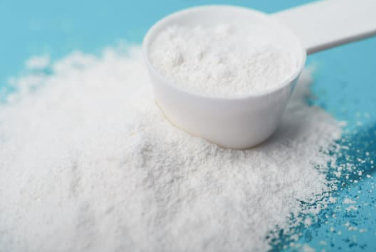
This is one of the more interesting developments in recent years. Micronisation is a mechanical process that reduces the particle size of the creatine powder — think much finer flour rather than coarse sugar.
It doesn't change how effective the creatine is. What it changes is how it behaves once you mix it: better dispersion in liquid, less sedimentation at the bottom of your glass, and for a meaningful number of people, noticeably less gut discomfort — particularly at higher doses or during a loading phase.
If you've tried creatine before and found it sat heavily, a micronised version is worth trying before you give up on it altogether.
Capsules, powder or gummies — what actually makes sense?
This is where the maths gets interesting, and where most people get caught out.
Capsules are typically dosed around 500mg each. To get a standard 5 gram dose, you'd need to take ten capsules. That's not just inconvenient — it makes capsules one of the more expensive ways to take creatine, gram for gram.
Powder, by comparison, is straightforward and economical. One scoop, mixed into water, gets you your full dose without the capsule count or the cost.
Gummies are the newest format, and worth a genuinely careful read of the label. A full 5 gram dose from gummies almost never comes from a single gummy — you're usually looking at several. And gummies need something to hold them together and make them palatable, which often means dextrose, maltodextrin or maltitol. These can cause gut discomfort in some people, which is a particularly unwelcome surprise on a product marketed as "sugar free" — sugar alcohols like maltitol are well known for exactly that effect. Other gummy formulations contain as much as 7 grams of sugar per serve, which isn't ideal if you're actively trying to reduce your intake.
My advice either way: don't just look at serving size. Check the actual creatine dose per serve, and what else is riding along with it.
Why third-party testing matters more than the label claims
Here's an uncomfortable truth: a large number of over-the-counter creatine products on the market have never been independently tested for contamination or purity. The label tells you what the manufacturer says is inside. Third-party testing tells you what's actually inside.
This is genuinely the single biggest differentiator between a quality product and a cheap one — far more than flavour, packaging or marketing claims.
What does a properly tested product actually look like?
Creapure is a useful reference point here. It's manufactured in a single facility in Trostberg, Germany, and every batch is tested before release. It isn't micronised, but it is consistently pure, and the testing is verifiable — you can read about their process directly at
I also stock Chief's Creatine Focus in the Foxy Shop, which is micronised and has been independently lab tested. Here's what that testing actually showed, compared against Creapure's own published specifications:
Chief Creatine* | Creapure** | |
Assay / Purity | 100% | ≥99.9% |
Creatinine | <100 mg/kg (under detection limit) | 32 mg/kg |
Dicyandiamide | ~8 mg/kg | ≤50 mg/kg |
Dihydrotriazine | Not detected | 3 mg/kg |
Total Impurities | <0.001% (exceptionally low) | Extremely low |
Microbial Profile | All pathogens negative | Not disclosed |
Heavy Metals (Total) | All <0.1 ppm | Not disclosed |
Origin | Inner Mongolia, China | Trostberg, Germany |
Chief Creatine figures according to independent third-party Australian lab testing (TGA-licensed and APVMA-licensed). *Creapure figures according to product specification. Testing varies batch to batch, so I'm not claiming Chief Creatine is "better" than Creapure — only that, on these results, it's at least on par in terms of purity.
This is exactly the kind of transparency I want from anything I put in the Foxy Shop. Not a marketing claim. A test result.
My picks in the Foxy Shop
Natraceutics Creatine — a pure, single-ingredient creatine monohydrate. No blends, no additions. If you want the simplest, cleanest option on the shelf, this is it.
Chief's Creatine Focus — micronised for easier mixing and gentler digestion, with one scoop providing 3 grams. For a standard daily dose, I generally recommend two scoops (6 grams).
Want a practitioner-only option instead?
If you'd rather go with a practitioner-only brand like Designs for Health, that's something I can talk you through directly — these aren't available for general purchase, but I can prescribe and dispense them as part of a Quick Script Consult.
A final note
None of this replaces individual healthcare advice. Creatine is well studied and generally well tolerated, but what's right for your body, your goals and your current health picture is genuinely worth discussing with your own practitioner — whether that's me or someone else you trust.
Frequently Asked Questions
Do I need to load creatine, or can I just take 5 grams a day?
Loading isn't necessary. A loading phase (typically 20–25 grams a day for 5–7 days) reaches full muscle saturation faster, but taking a consistent 3–5 grams daily achieves the same result over roughly three to four weeks. Consistency matters more than the strategy you choose.
What's the difference between micronised and regular creatine monohydrate?
Micronisation is a mechanical process that reduces particle size, improving how well the powder disperses and dissolves in liquid. It doesn't change effectiveness, but it can reduce sedimentation and gut discomfort, particularly at higher doses.
Are creatine gummies a good option?
They can be, but check the label carefully. A full dose rarely comes from one gummy, and many formulations include dextrose, maltodextrin or sugar alcohols like maltitol, which can cause gut discomfort — sometimes despite being marketed as "sugar free." Some contain up to 7 grams of sugar per serve.
How do I know if a creatine product has actually been tested for purity?
Look for evidence of independent, third-party lab testing against recognised impurity limits — not just a purity claim on the label. Many over-the-counter creatine products are not independently tested at all.
Are capsules or powder more economical?
Powder is generally more cost-effective. A standard 5 gram dose typically requires around ten 500mg capsules, while a single scoop of powder delivers the same dose in one go.
What is Creapure?
Creapure is a pharmaceutical-grade creatine monohydrate manufactured in a single facility in Trostberg, Germany, with every batch independently tested for purity. It is not micronised but is consistently high purity.
Ready to choose with confidence?
Or if you'd like guidance specific to your own health picture:
Curious whether any of this changes depending on your life stage — your twenties versus your fifties? That’s exactly what Part 3 covers.
Cherice Baker is a Registered Natural Medicine Practitioner (NHPNZ) with over 25 years of clinical experience in nutritional medicine, herbal prescribing and functional health. She practises from Rolleston, Canterbury, and consults with clients across New Zealand online.
Comments